
For experiential staffing agencies

Get your team's time back.

We help experiential staffing agencies remove repetitive operational work — so the team you already have spends less time managing process and more time handling growth.

  • Requests, scheduling, approvals, and reporting — off your team's plate
  • One workflow at a time, starting with the one costing the most hours
  • Keep your staffing software and your CRM — we build around them
  • Handle more volume without admin headcount growing with it
Free 30-min Operations Review

Where is your team losing the most time?

Fill this in once, then pick a time — no double-entry.

NDA on request · Your details stay with us.

Perfect 10 Promotions · 3,000–5,000 requests a month

Same team, no new hires. 40 fewer hours a week.

120 → 80

combined hours a week handling requests, before and after

~170 hrs

back every month, for the same team

1 in 20 → 1 in 100

requests with an error, before and after

See the Perfect 10 case study

Why time becomes the problem

Growth should not keep taking more of your team's time.

Every new client, program, market, and activation creates more work behind the scenes.

  • →More requests to process.
  • →More schedules to manage.
  • →More changes to track.
  • →More reports to prepare.
  • →More information to move between people and systems.

At first, the team absorbs it.

This is what that looks like.

Event Tracker 2026 (v7) FINAL
FileEditViewInsertFormatDataToolsExtensionsHelp
Share
fxQuoted
A B C D E F G
1 Event Client Date Status Est $ PM Notes
2 Dallas tasting Solstice Oct 14 Quoted 4,039.92 Hannah v2 or v3? check email
3 Campus sampling Halcyon Oct 9–10 Approved ?? ask accounting
4 Street team NYC Brightline Sep 28 Quoted 1,391.04 Diego ran last week — still says quoted
5 Street team NYC Brightline Sep 28 Approved 1,391.04 Diego dupe? keep both for now
6 Dealer days Pinnacle Oct 27 Approved 4,596.48 who has capacity??
7 Holiday preview Solstice Nov 2 Lost 3,113.86
8 Harbor coffee Harbor Nov 15 New in Ruth's inbox
9              
10              
11              
12              
13              
14              
+ ≡ Tracker Tracker (old) Checklist Per diems DO NOT EDIT
The event tracker. Current only when someone remembers.
Gmail Search mail R
3 of 1,284

Re: Re: Re: Fwd: 8 BAs Dallas on the 14th — revised estimate (v3)

Inbox
7 earlier messages Tue – Wed
  1. E
    Elena Ruiz <elena@solsticeskin.com> Tue, Sep 22, 9:12 AM

    to me ▾

    Hi! We need eight brand ambassadors in Dallas on the 14th — can you help?

  2. K
    Kurt Delaney <accounting@northstarstaffing.com> Wed, Sep 23, 8:03 AM

    to me ▾

    Attached. Typed it up line by line, agency fee added by hand — let me know if the travel is right.

  3. E
    Elena Ruiz <elena@solsticeskin.com> Thu, Sep 24, 4:51 PM

    to me ▾

    Thanks! Can we make it ten instead of eight, and add Sunday?

  4. R
    Ruth Okafor Thu, Sep 24, 5:20 PM

    to Elena, Kurt ▾

    Sorry — which one is the latest version?

Reply Forward
The estimate thread. Ten revisions per quote, sixty events a month.

Then people stay busier for longer. Another coordinator gets added. Another admin task gets passed around. The owner or ops lead becomes the person connecting everything together.

The problem is not growth itself.

It is how much more time the operation starts demanding as you grow.

That is the part we focus on.

Less time on the work around the work

Give your team hours back every month.

We look for the workflows consuming the most unnecessary time and improve those first. The technology is different in every agency. The goal stays the same: give time back to the people already running the operation.

A coordinator stops re-keying

No more hours moving the same information between the inbox, the sheet, and the roster tool.

A request reaches the right person first time

It flows straight to the team that handles it instead of being re-entered three times on the way.

Reports build themselves

The client recap that took an afternoon to assemble is generated from the data already in the system.

The owner steps out of the middle

Hand-offs happen without the founder or ops lead being the person who connects everything.

If your team recovered 20, 50, or 100+ hours a month, where would that time go?

  • →Could the same operations team support another client?
  • →Could an account lead spend more time with customers instead of preparing reports?
  • →Could the owner step out of a process they are still personally holding together?
  • →Could you take on more program volume before needing another coordinator?

That is where getting time back becomes more than an efficiency exercise — and the team can handle more without admin headcount growing at the same rate. It creates room for the agency to grow.

How we work

We start with where your time is going.

Every agency runs differently, so we do not walk in with a generic platform and tell you to change your operation around it.

01

Find the work consuming the most time

We sit with your team and understand how the work actually moves today. Where are people spending time? What gets copied between systems? What gets harder every time program volume goes up?

Free · 30 minutes

02

Pick one workflow worth fixing first

We focus on the process where getting time back would make the biggest difference. Not twenty features. Not a full rebuild for the sake of it. One operational bottleneck at a time.

One bottleneck, scoped in writing

03

Build around the way your agency already works

The tools you like stay. What we build fits how your team runs — a weekly demo, a staging link from the first working version, and a 24-hour feedback loop.

Weekly demos · Your Slack

04

Measure what changed

How long did the process take before? How long now? What repetitive work disappeared? Can the same team handle more volume? That is the result we measure — and the one we care about after launch.

Before vs. after, in hours

Step three might be: A client request portal An internal operations workflow Scheduling automation Rules-based estimates Approvals and change tracking Integrations between the tools you already use Automated reporting Dashboards and alerts Reconciliation and back-office workflows
What getting time back looks like

Perfect 10 handles 3,000–5,000 tasting requests a month.

Perfect 10 Promotions
Hours per week
120→80
combined hours a week
Error rate
5×
fewer errors
1 in 20 → 1 in 100
Team size
Same
team, more volume
Perfect 10 Promotions · 2025

~170 hours a month

back, for the same team. High request volume, client coordination, scheduling, changes, third-party data, and reporting — we built workflows around the way the team already operated:

  • →A client portal for tasting requests
  • →Admin-side request creation and management
  • →Request and status tracking
  • →Automated syncing into the scheduling system
  • →Third-party sales-data integration
  • →Analytics and reporting
"Prior to the portal it was a lot more back and forth in emails — probably 120 hours a week combined. Now it's down to 80."
Christy Greico-Smith Christy Greico-Smith · Founder, Perfect 10 Promotions
Read the full case study

Perfect 10's result is specific to their operation. Every agency has different volume, workflows, and opportunities for improvement.

We do not work with everyone

This is not for every agency.

Two things decide it: how often the same work repeats, and whether a person is still the system holding it together.

✓Worth a conversation if…

  • →You already handle meaningful recurring activation or staffing volume.
  • →Ops gets busier every time sales go up, and you keep adding coordinators to keep up.
  • →Spreadsheets, inboxes, Slack, or people are what connect the parts of the operation.
  • →You use staffing software, but important workflows still happen outside it.

✕Probably not yet if…

  • ·You run a handful of events a month and one person comfortably holds the process — the spreadsheet still works, and we will say so.
  • ·What you need is a better roster tool — that is not what this is; we will point you at the right ones.

The more often a workflow repeats, the more each recovered hour is worth.

Not sure which side you are on? The review will tell you — free, thirty minutes.

When a tool is missing

Our starting points.

Most agencies bring their own tools. When one is missing, we start from ours instead of from zero — so the build is shorter and the first version arrives sooner.

Our product · in build

ExperientialOps

The layer around your roster tool.

Client requests in, estimates computed from your pricing rules, click-to-approve, a live pipeline, and a project manager on every event.

  • →Every event on one board, by stage — with the open value and who is overloaded
  • →Estimates generated from your rates, travel and volume rules; adjustments carry a reason
  • →The client approves online, and that click moves the event forward

Fits: For agencies whose requests still arrive by email and whose estimates are still typed by hand.
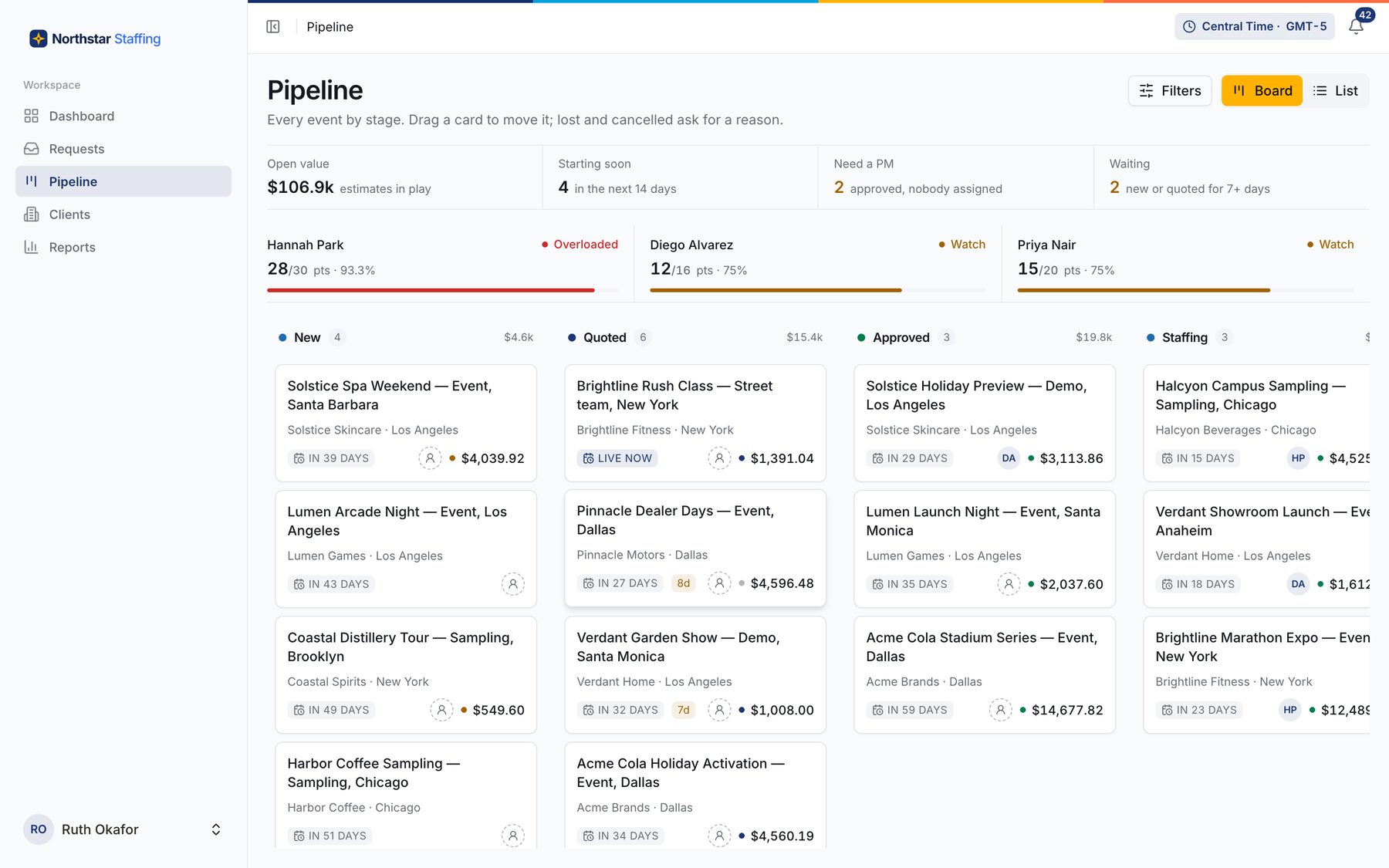
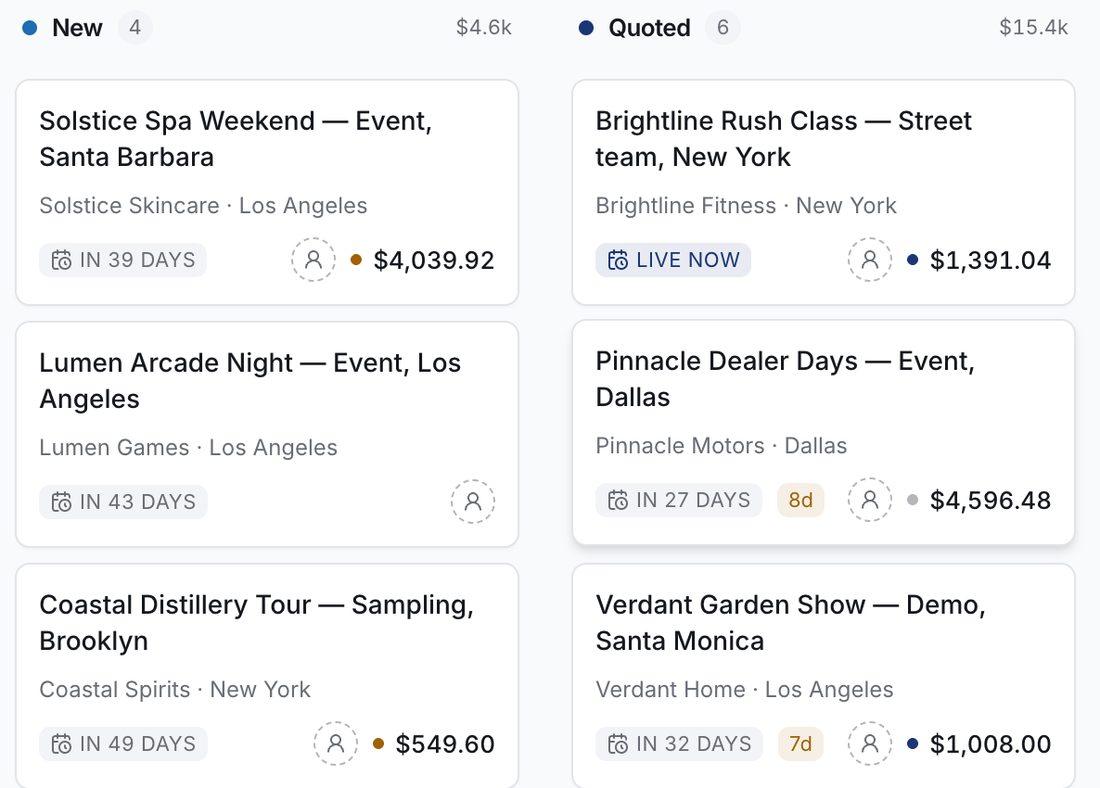
ExperientialOps pipeline board showing events by stage with open value and team load
Two pipeline columns, New and Quoted, with the estimate value on each card
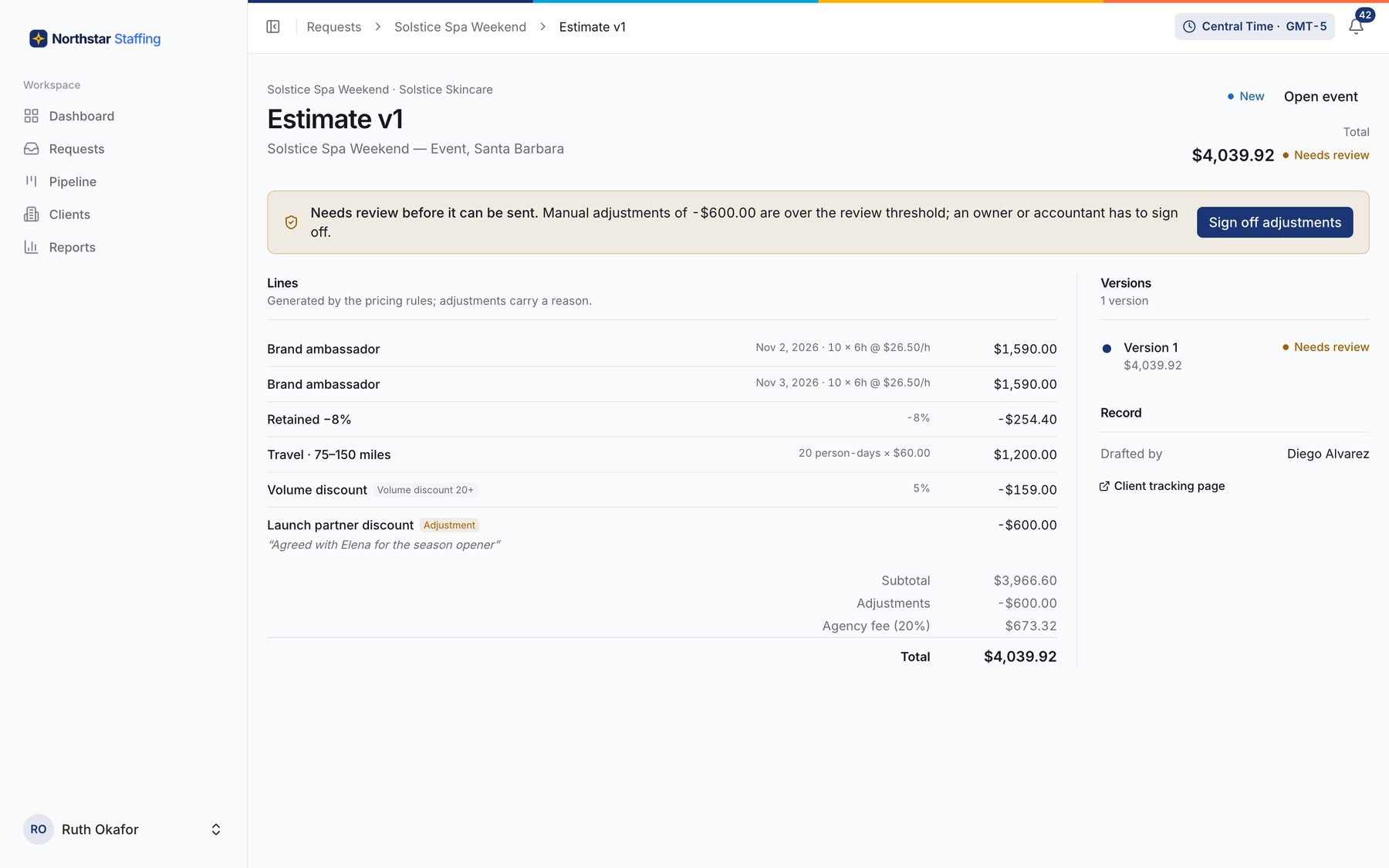
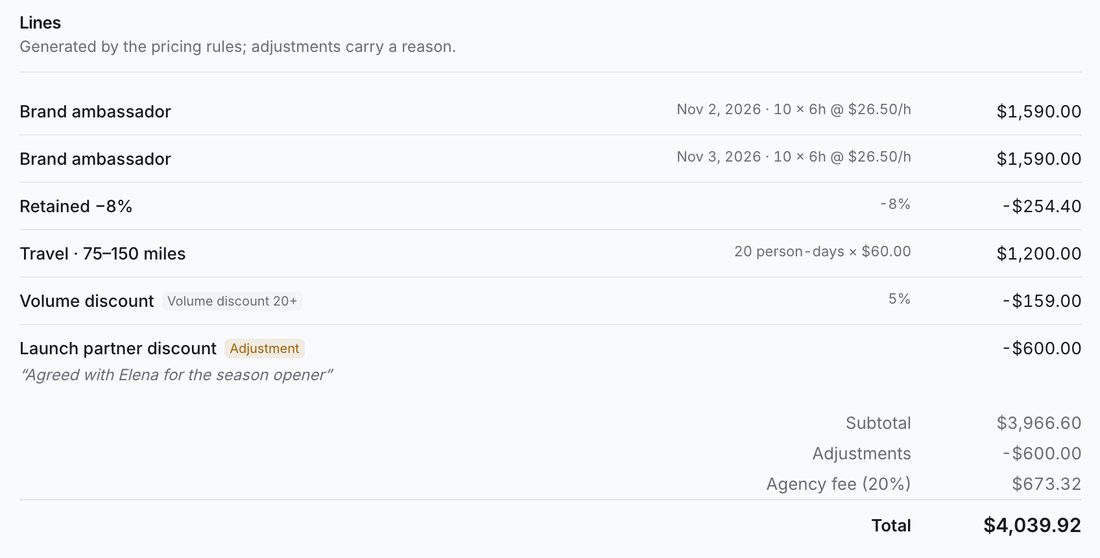
An ExperientialOps estimate with lines generated by pricing rules
Estimate lines generated by the pricing rules, with an adjustment carrying a reason
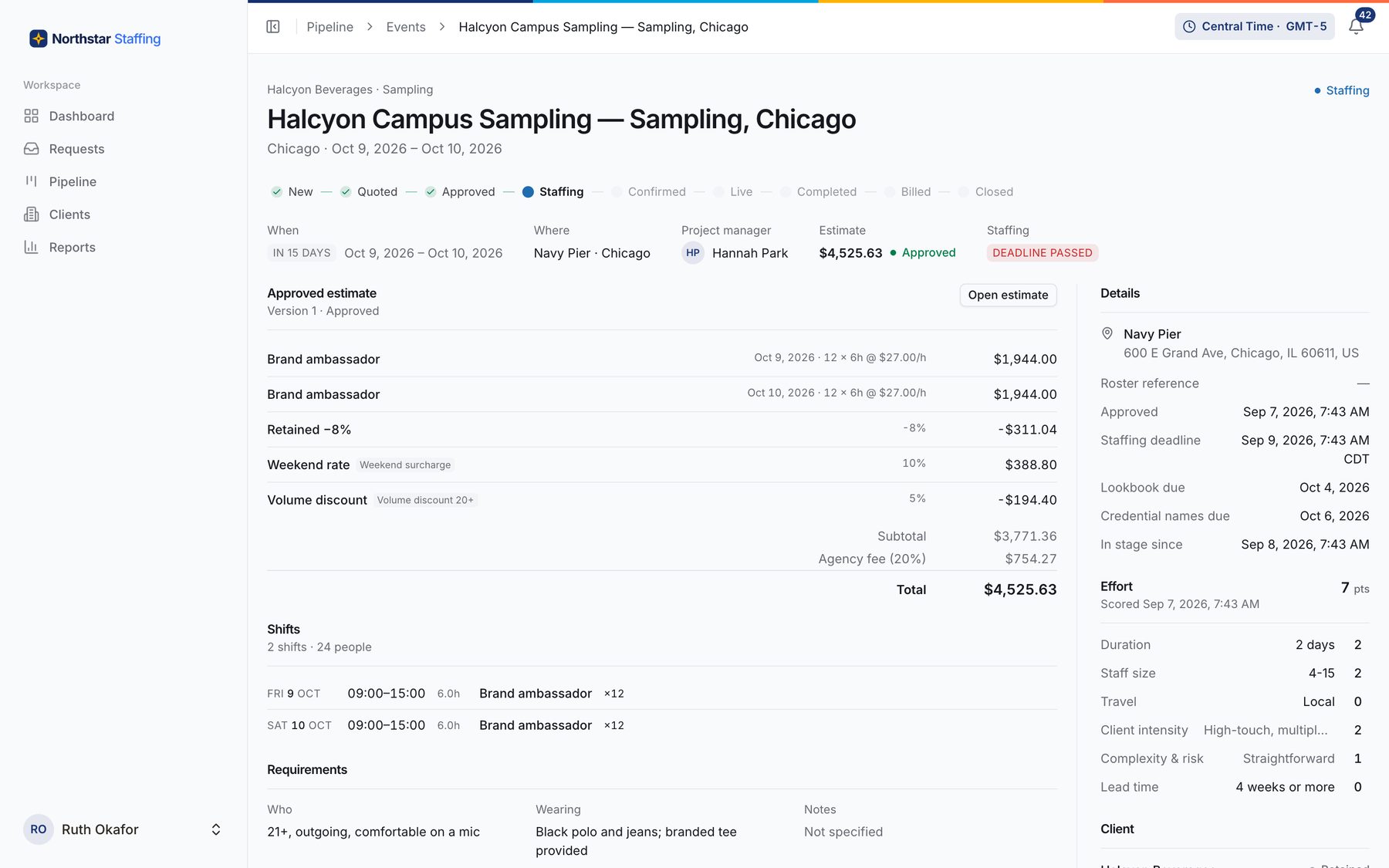
An ExperientialOps event page with its stage strip, shifts, client and activity timeline
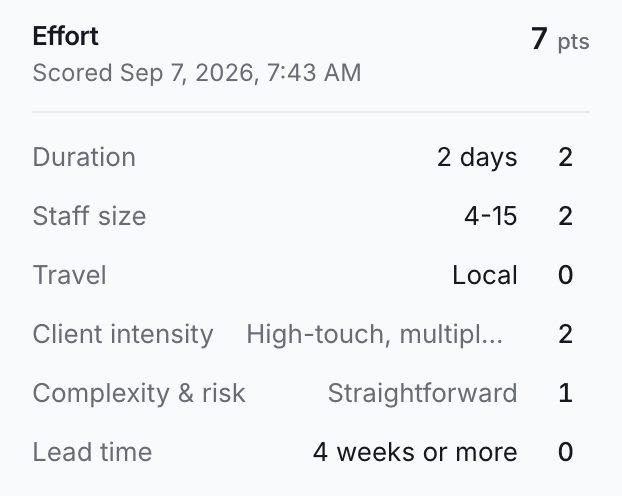
The effort score panel for an event: duration, staff size, travel, client intensity, complexity, lead time

Every event by stage, with the open value and who on the team is overloaded.

Lines generated by your pricing rules; a manual adjustment carries a reason and needs sign-off.

One page per event: stage, project manager, shifts, client contact, and a timeline of every action.
Our product · in build

Amplifield

The roster itself.

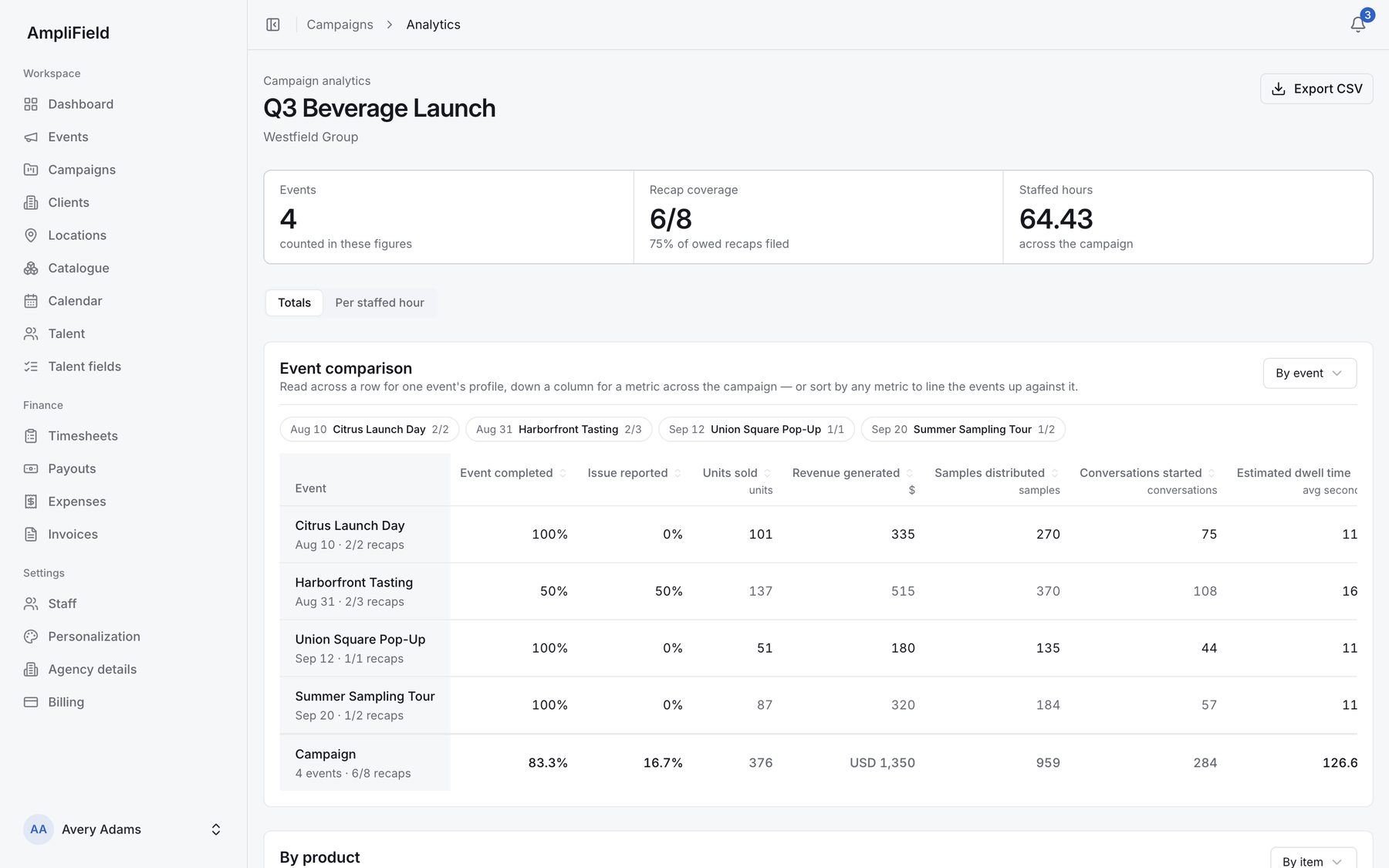
Shifts, talent, check-in, and field recaps that come back as numbers rather than free text — units sold per product, rolled up per campaign.

  • →Recaps bound to metrics — units sold, samples, conversations — so a campaign reports itself
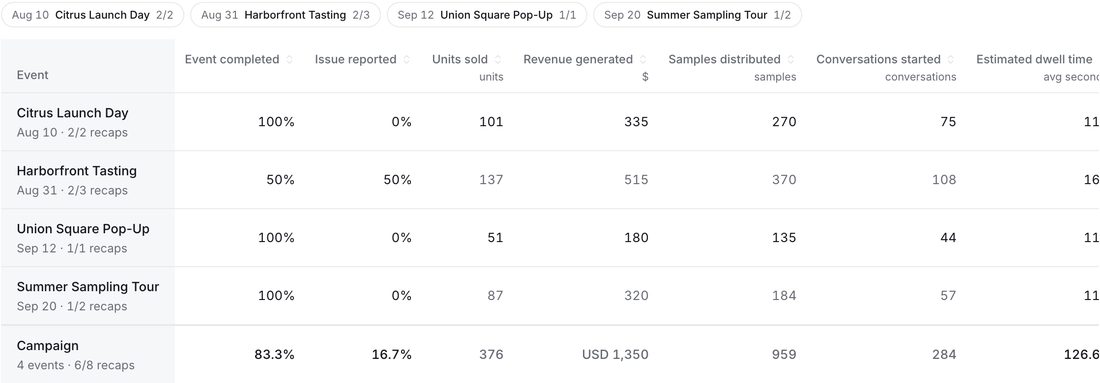
  • →Every event compared on the same numbers, with recap coverage and staffed hours beside them
  • →Events, shifts, and how staffed each one is, on one screen

Fits: For agencies without a roster tool, or whose tool stops short of the client-facing and margin layer.

Amplifield campaign analytics comparing four events on units sold, revenue, samples and conversations
Event comparison rows: units sold, revenue, samples and conversations per event and for the campaign
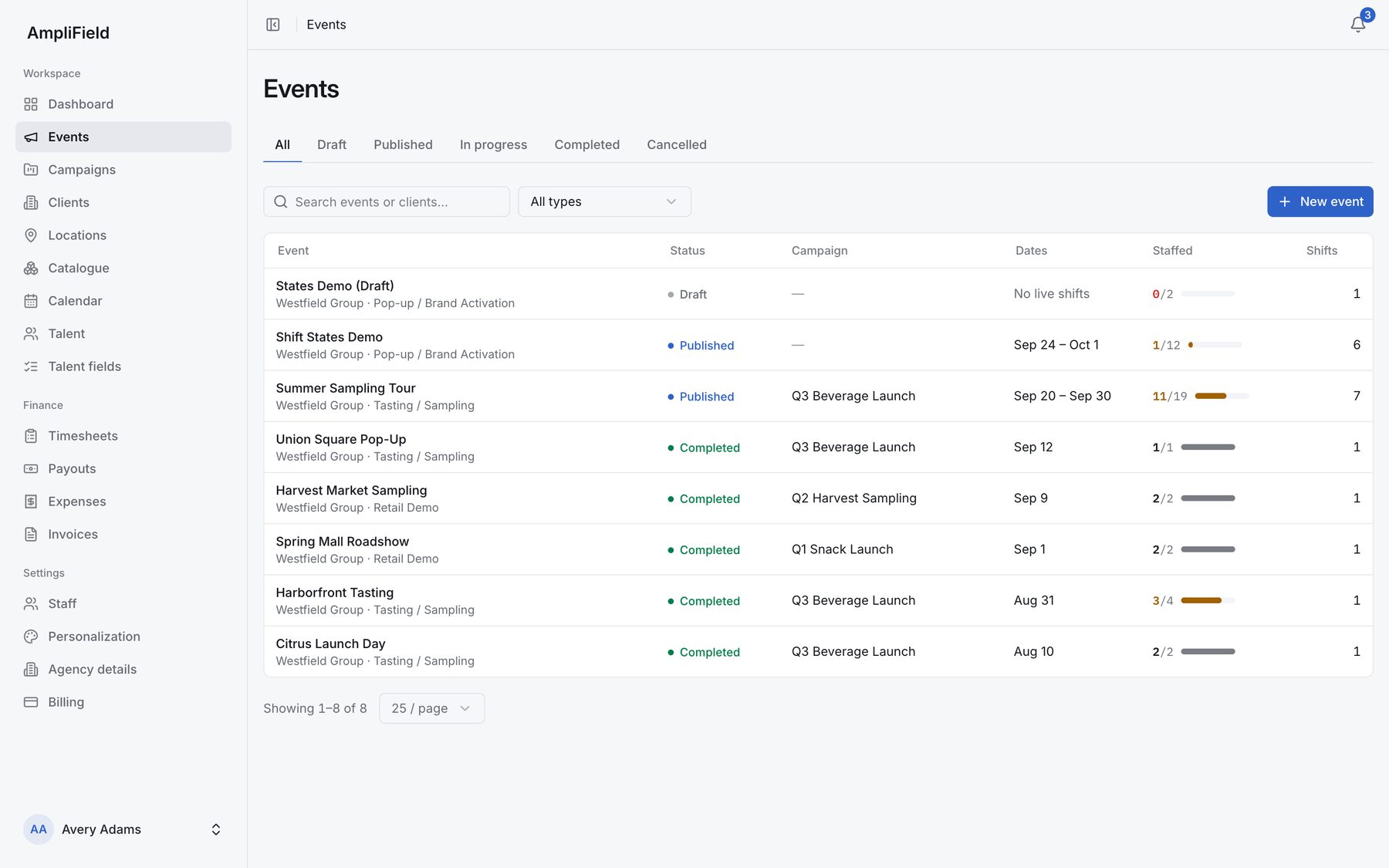
The Amplifield events list with status, campaign, dates and staffing progress per event
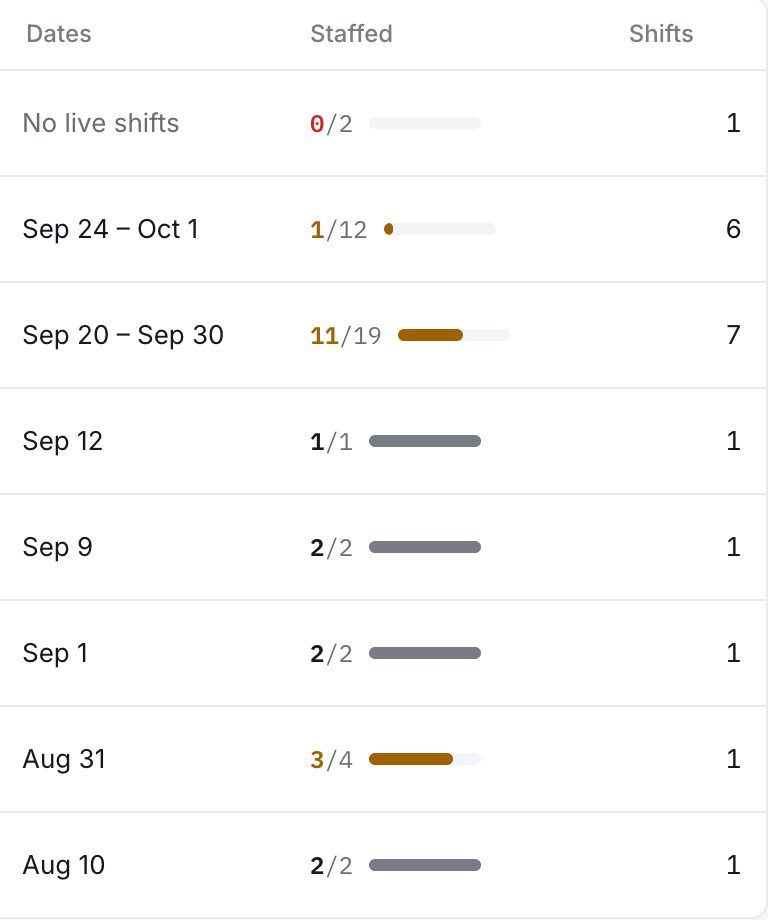
The dates, staffed-progress and shift-count columns of the events list
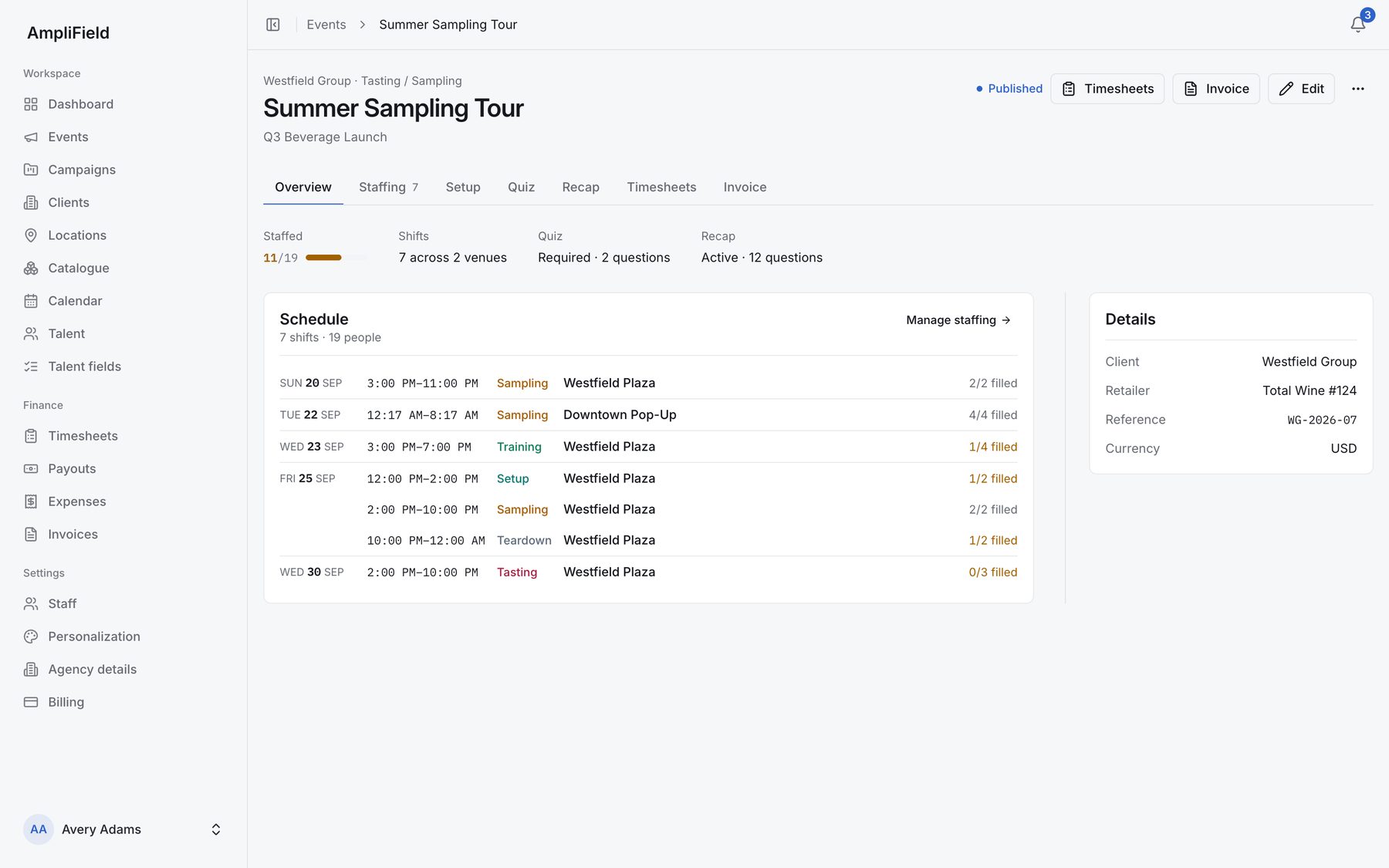
An Amplifield event overview with its schedule, staffing and details
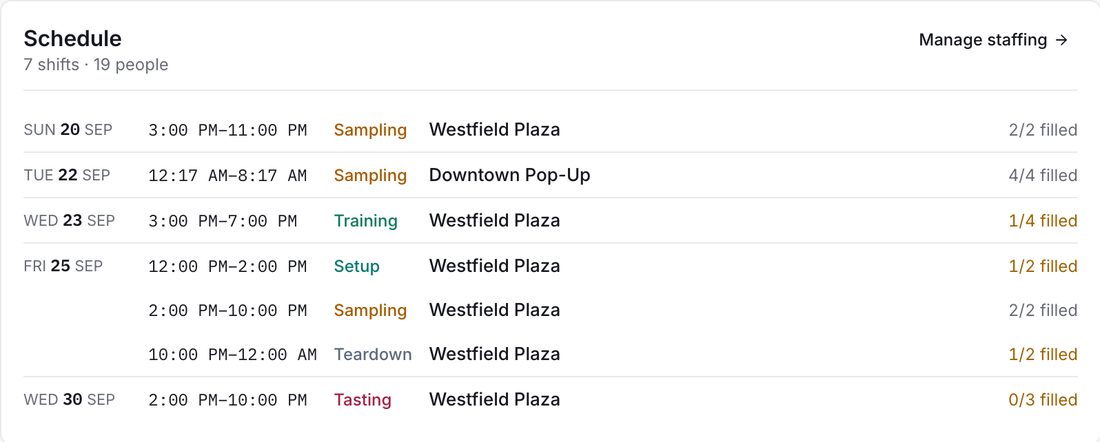
The schedule card for one event: seven shifts across two venues, with how many are filled

Four events compared on units sold, revenue, samples and conversations — from recaps, not spreadsheets.

Status, campaign, dates and how staffed each event is, at a glance.

The schedule, staffing, recap and timesheets for one activation, on one page.

Both are ours to offer and yours to keep or skip. Neither is required for the review, and neither replaces a tool that already works for you.

Questions agencies ask

Before you book — straight answers to the things founders ask first.

Thirty minutes, free, on a call. You walk us through how one client request moves through your agency today — from the moment it arrives to the moment it is billed — and we map it live, marking where the hours go. You leave with that map and our honest view of where the biggest opportunity is, whether or not you work with us. No prep, no deck, no platform demo.

No. Keep them. Roster and workforce tools are good at what they do — availability, shifts, check-ins, timesheets. The time usually leaks around those systems, not inside them: the request that arrives by email, the estimate typed by hand, the sheet that tracks the pipeline, the recap assembled every Friday. That is where we work. Often the biggest win is connecting what you have so your team stops carrying information between tools by hand.

It depends entirely on how often a workflow repeats — the more times a month something is done by hand, the more each recovered minute is worth. Perfect 10 Promotions handles 3,000–5,000 requests a month; the same team — nobody hired — went from about 120 combined hours a week to 80, and errors dropped from roughly 1 in 20 to 1 in 100. That is their result on their operation. Yours will be different, and the review is where we put a number on it before anything is built.

It depends on which workflow we fix first and how much of it is rules versus judgement, so we do not quote before we have seen the operation. After the review you get a scoped proposal with a fixed figure and a week-by-week plan, in writing, before anything starts. The review itself is free and there is no obligation to go further.

You get a staging link as soon as the first version works — usually within the first few weeks — and the first workflow is typically live in around eight weeks. It is built to be adopted incrementally: point new requests at the new intake, run estimates through it, and keep everything else where it is until the team is ready to move the rest.

Possibly, and we will tell you. The rule of thumb is repetition: if the same manual work happens dozens, hundreds, or thousands of times a month, there is time to get back. If you run a handful of activations a month and one person comfortably holds the whole process, the spreadsheet is still the right tool and we would rather say so than sell you a build.

One person who can give feedback within a day of each weekly demo — that is what keeps a build on schedule. A few real examples: some email threads from request to invoice, and the spreadsheets you run on today. And your rules, even if they currently live in someone's head. We write them down together on the first call and do the rest.

You do. It runs under your domain and your brand, on your own cloud account or one we manage for you. The source code is yours, the data is yours, and you can export everything at any time. Ongoing support is available if you want us to keep extending it, but nothing is licensed or locked to us.

Something specific to how your agency runs? Book an Operations Review and ask it on the call — or read the general FAQ.

Start with one time-consuming workflow

Where is your team losing the most time today?

We will walk through your current operation with you, identify the work consuming unnecessary time, and show you where we think the biggest opportunity is. We start with your operation, not a generic platform demo.

NDA on request · Your details stay with us.

Book a free Operations Review